Amazon AI Optimization: How to Use Artificial Intelligence for Better Listings, SEO and Content
Last updated: April 2, 2026
Reading time: approx. 14 minutes
Amazon sellers are under enormous pressure: more and more products, constantly new requirements for listings, plus international marketplaces on top. Anyone still writing and optimizing their product copy by hand is losing valuable time — and revenue. Artificial intelligence is right now fundamentally changing how successful sellers create and optimize their Amazon listings.
In this guide we show you how to use AI deliberately for your Amazon optimization — from keyword strategy and content optimization to scaling across multiple marketplaces. And we show you which tool takes the most work off your hands.
Table of contents
Why AI is fundamentally changing Amazon optimization
The days of spending hours researching, writing and optimizing every single listing are over. AI for Amazon sellers is no longer a topic for the future — it's the current standard of successful brands. And the reasons are obvious.
Amazon itself is actively driving the AI shift: with Rufus as an AI shopping assistant and COSMO as a semantic understanding model, the platform increasingly understands products in context. Anyone who doesn't optimize their listings for these AI systems loses visibility to competitors who do.
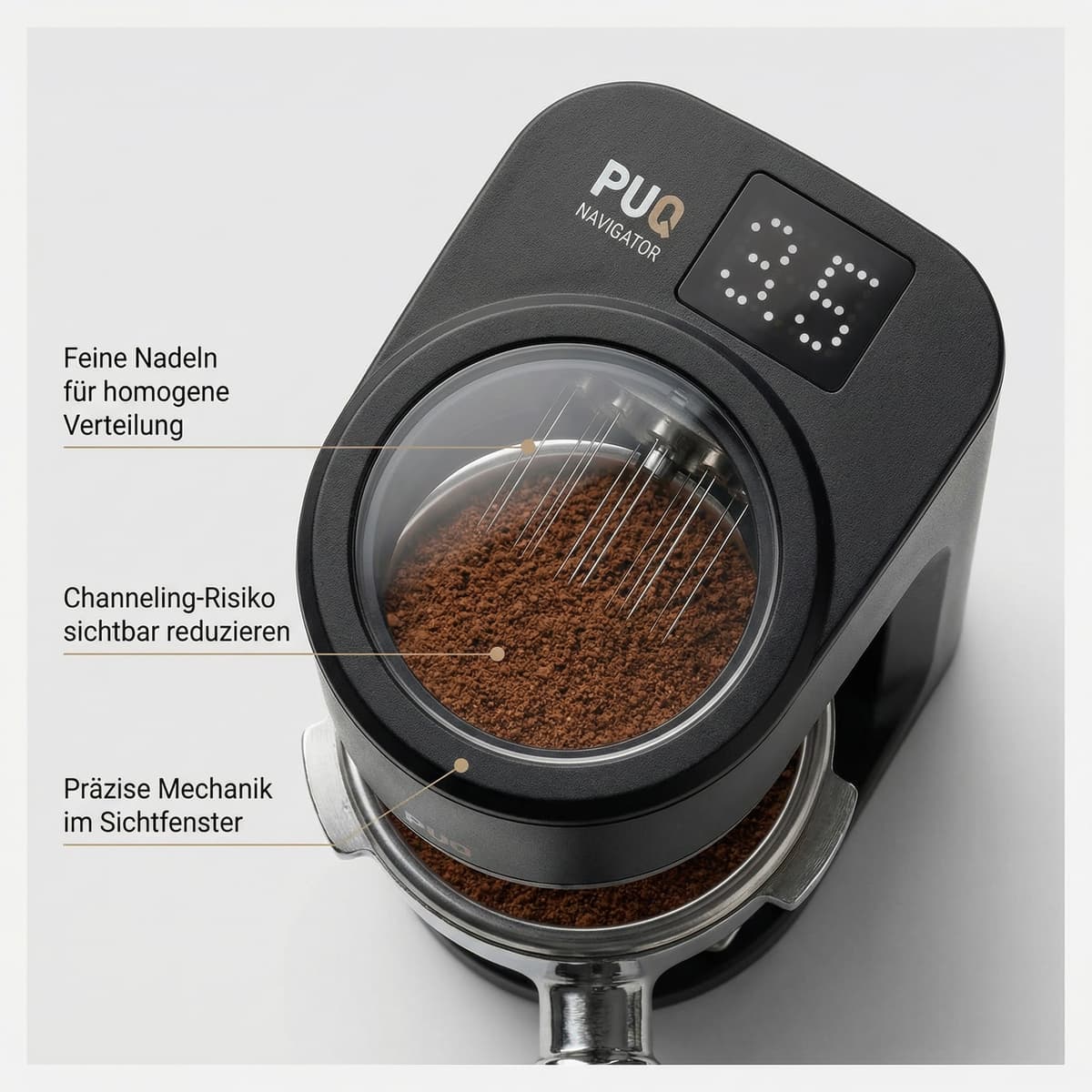


AI-optimized product images — created with the HORAiZON AI Content Tool
What AI delivers in Amazon optimization
Speed
Create listings in minutes instead of hours
Precision
Optimal keyword placement following the algorithm's logic
Scaling
Localized listings for every marketplace
The decisive advantage isn't just the time savings. A specialized AI tool knows the Amazon rules better than any copywriter: character limits, backend-keyword logic, the weighting of the individual listing areas and the current best practices for the A9 algorithm. The result is consistently high-quality listings — whether you manage 5 or 500 products.
Amazon listing optimization with AI: titles, bullets and descriptions
Every area of your Amazon listing has a specific function — and AI can optimize each one in a targeted way. That starts with the product title and reaches all the way to the backend keywords.
Product title: automating the most important ranking signal
The title is the strongest ranking factor of your listing. The first 80 characters decide between a click and scrolling past. An AI tool that specializes in Amazon knows the optimal structure: brand name, primary keyword, core product features — all in the right order and length.
Instead of agonizing yourself over whether "Bluetooth Headphones Wireless Over-Ear" or "Over-Ear Headphones Bluetooth Wireless" performs better, the AI makes the data-driven decision for you.
Bullet points: turning features into buying arguments
The most common weakness of manually written bullet points: they list technical specs instead of communicating customer benefits. AI automatically transforms your product features into convincing selling points — with the right mix of keyword relevance and persuasive power.
Example: manual vs. AI-optimized
Written manually:
"4000mAh battery, 2h charge time, Bluetooth 5.3"
AI-optimized:
"ALL-DAY MUSIC WITHOUT RECHARGING - The powerful 4000mAh battery delivers up to 40 hours of playback. Fully charged in just 2 hours. Bluetooth 5.3 ensures a stable connection with no dropouts"
Backend keywords: don't waste a single byte
The backend keywords give you 249 bytes for invisible search terms — synonyms, spelling variants and long-tail keywords. An AI tool automatically analyzes which keywords are already covered in the visible content and fills the backend exclusively with complementary terms. No repetitions, no wasted bytes.
Amazon SEO and AI: using keywords intelligently
Amazon SEO optimization was a manual process for a long time: research keywords, drop them into a spreadsheet, painstakingly work them into titles and bullets. AI completely changes this workflow.
A specialized Amazon AI tool understands not just individual keywords, but semantic relationships. It knows that "wireless headphones," "Bluetooth headset" and "wireless earbuds" all serve the same need — and distributes these variants intelligently across all listing areas.
AI-powered SEO optimization in comparison
| Aspect | Manual | With AI tool |
|---|---|---|
| Keyword integration | Trial & error | Data-driven placement |
| Character limits | Count manually | Automatically respected |
| Duplicate keywords | Often overlooked | Automatically avoided |
| Time per listing | 2-4 hours | 10-15 minutes |
| Consistent quality | Depends on the copywriter | Consistently high |
It's not only about keyword placement, though. AI also optimizes the readability and persuasive power of your copy. Because Amazon indirectly evaluates customer behavior too: a listing that ranks well but doesn't convert quickly loses its position again.
Rufus and COSMO: understanding and using Amazon's own AI
Amazon itself is betting heavily on AI — and that changes the rules of the game for sellers. Two systems are especially relevant here: Rufus and COSMO.
Amazon Rufus: the AI shopping assistant
Rufus answers customer questions in natural language directly in the Amazon app. Instead of "headphones bluetooth sport," a customer now types "Which headphones are good for jogging in the rain?" — and Rufus recommends matching products. Only listings whose content covers these usage scenarios get recommended.
COSMO: semantic product understanding
COSMO (Common Sense for E-Commerce) goes even further: it understands that a "gift for grandpa's 70th birthday" requires certain product attributes — without the customer naming them explicitly. Listings that address these implicit needs in their content get surfaced preferentially.
💡 Practical tip
A good AI Content Tool for Amazon automatically accounts for the requirements of Rufus and COSMO when creating copy. It builds in problem-solving phrasing, usage scenarios and audience references — aspects that are often forgotten in manual copywriting.
The consequence is clear: anyone who still optimizes their listings exclusively for classic keywords is missing a growing share of search queries. AI-powered optimization closes this gap by optimizing for both the traditional A9 algorithm and the new AI systems.
Scaling content creation: from one listing to hundreds
Perhaps the biggest lever of AI in Amazon optimization is scalability. What takes weeks manually, an AI tool handles in hours — with no loss of quality.
International expansion without the language barrier
You sell on Amazon.com and want to expand to Amazon.co.uk, .de or .fr? An AI Content Tool doesn't simply create translations, but localized listings: adapted keywords for each marketplace, culturally appropriate phrasing and marketplace-specific character limits.
Covering variants and product families efficiently
If you have 50 product variants — different colors, sizes, versions — you don't write 50 listings from scratch with AI. The tool varies the descriptions intelligently so that each listing is unique and optimized for the specific variant. That doesn't just save time, it also avoids duplicate content.
Time required compared: manual vs. AI tool
| Task | Manual | With AI tool |
|---|---|---|
| 1 complete listing | ~1 hour | ~5 minutes |
| 10 listings | ~10 hours | ~1 hour |
| 50 listings | ~50 hours (~6 working days) | ~5 hours |
| 100 listings | ~100 hours (~12 working days) | ~1.5 working days |
Image optimization: why visual content is decisive for the AI
Text is only half the battle. Amazon customers make their purchase decision in large part through images — and Amazon's AI systems increasingly analyze visual content too. Anyone who doesn't optimize their product images is leaving conversion potential on the table. The good news: here too, AI makes the decisive difference — and in many cases makes expensive graphic designers unnecessary.
Creating product images with AI: no graphic designer needed anymore
Until now, image production for Amazon was one of the biggest cost factors: a photographer for the product photos, a graphic designer for infographics and lifestyle composites, a translator for text overlays on international marketplaces. Per listing, that could quickly add up to 300 to 800 dollars — for the images alone.
With AI-powered image generation, that changes fundamentally. The HORAiZON AI Content Tool creates professional product images, infographics and lifestyle scenes directly from your product data. You need neither a photographer nor a graphic designer — the AI generates everything you need for a complete image gallery.
What AI image generation delivers for Amazon:
- ✓Clipped main images on a white background, Amazon-compliant in the correct resolution
- ✓Infographics with text overlays - features, dimensions and USPs prepared visually
- ✓Lifestyle images - your product in realistic usage scenarios, without a photo shoot
- ✓A+ content graphics - matching your modules, designed on-brand
- ✓Localized images - text overlays automatically in the right language for every marketplace
Cost comparison: graphic designer vs. AI tool
| Service | With graphic designer | With AI tool |
|---|---|---|
| Infographics (5 pieces) | 200-500 dollars | Included |
| Lifestyle composites | 150-400 dollars | Included |
| A+ content graphics | 300-800 dollars | Included |
| Delivery time | 5-14 business days | Instant |
Images and Amazon's AI: why visual content counts twice
Amazon's AI systems like Rufus analyze not only text, but visual content too. Images with clear text overlays help the AI understand the product context better. If your infographic image shows "Waterproof to 30m," Rufus can recommend your product for the query "Which watch can I wear while swimming?"
The alt texts of your A+ content images play a role too: they are indexed by Amazon and Google. The HORAiZON AI Content Tool automatically generates SEO-optimized alt texts for all created images — a detail that is almost always forgotten in manual creation.
💡 Text and image from a single source
The biggest advantage of an integrated AI tool: text and images are created together and tell a consistent story. Every generated image visually supports a selling point from the bullet points. No briefing to a graphic designer, no rounds of revisions, no waiting times — all from one tool, ready to use immediately.
The AI Content Tool in practice: how it works
Many sellers try to create their listings with general-purpose tools — and end up disappointed: wrong character lengths, missing keyword strategy, no consideration of the Amazon guidelines. This is exactly what specialized solutions exist for.
The HORAiZON AI Content Tool was built specifically for Amazon sellers. It knows the requirements of every single listing area and generates content you can take straight into Seller Central.
Before vs. after: a product photo becomes a high-converting listing
A simple product photo isn't enough to win customers over on Amazon. The AI Content Tool turns it into professional, conversion-optimized images — without a graphic designer, without any wait.

Simple product photo, 120 x 160 px

AI-generated infographic with USPs
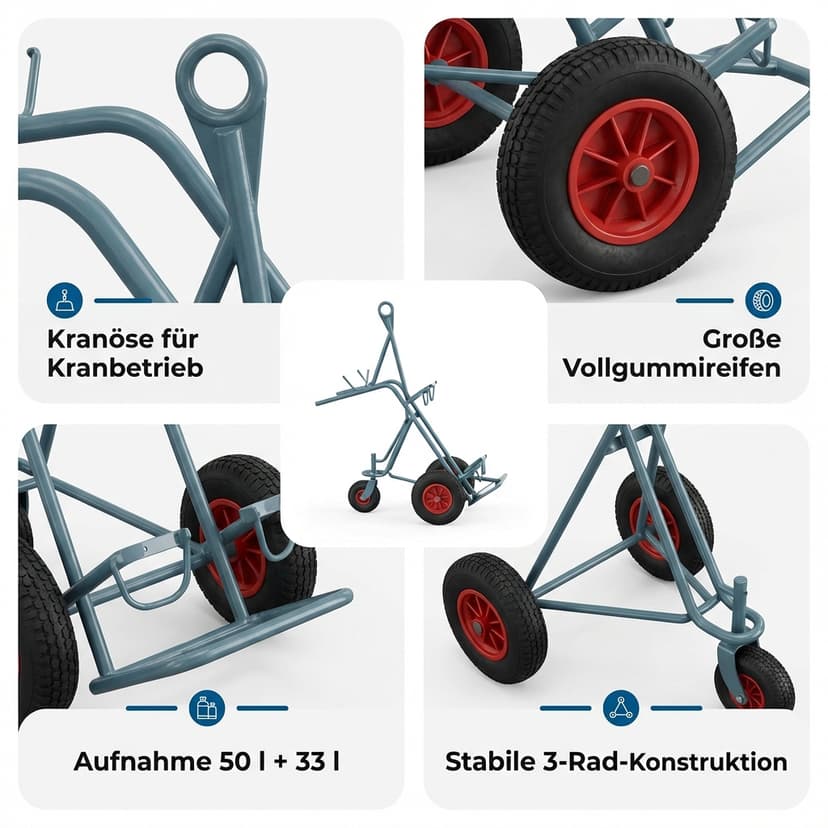
AI-generated feature detail view
Created with the HORAiZON AI Content Tool
What the HORAiZON AI Content Tool offers:
- ✓Optimized product titles with the correct character length and keyword placement
- ✓Convincing bullet points that turn features into buying arguments
- ✓Product descriptions with an SEO focus and natural language for Rufus
- ✓Backend keywords without duplicates, perfectly using all 249 bytes
- ✓Localized content for international Amazon marketplaces
- ✓Compliance with all Amazon guidelines and style guides
We built the AI Content Tool because we saw how much time our customers spend on manual listing creation. The quality was often inconsistent — one listing top-notch, the next one mediocre. With AI, sellers get both: consistently high quality and massive time savings.
Thorsten MüllerCEO at HORAiZON & Amazon Ads expert

The workflow is as simple as it gets: you enter your product information — brand, product type, key features and target keywords. From that, the tool generates a complete, optimized listing. You can then adjust individual areas or take it over directly.
Avoiding common mistakes in AI optimization
AI is a powerful tool — but only if you use it correctly. These are the mistakes we see again and again among Amazon sellers.
The 5 most common mistakes:
- 1.Using non-specialized tools - Anyone who creates their listings with tools that aren't specialized in Amazon often ends up with wrong character lengths, missing keyword logic and content that violates Amazon's guidelines.
- 2.Not reviewing the AI output - Even the best tool can misinterpret product details. Always check whether the generated content is factually correct.
- 3.Copy-paste without brand voice - Good AI content should fit your brand. Use tools you can set to your tone of voice.
- 4.No keyword strategy - AI can only optimize as well as the keywords allow. Invest in solid keyword research as a foundation.
- 5.Create once, never update - Even AI-optimized listings need regular updates. Markets, keywords and algorithms change.
This is exactly why a specialized tool pays off: the HORAiZON AI Content Tool eliminates these mistakes from the start, because it has the Amazon rules built in as fixed constraints.
Conclusion: AI is no longer an experiment, it's the standard
Amazon AI optimization is no longer a nice-to-have. Sellers who use AI tools for their listing creation and SEO optimization work faster, more consistently and achieve measurably better results. At the same time, Amazon itself is leaning more and more on AI — anyone who doesn't adapt loses visibility.
Your key takeaways:
- Specialized in Amazon: Only an Amazon AI tool knows the character limits, A9 logic and backend rules
- Think Rufus and COSMO: AI-optimized listings perform in classic search and in AI recommendations
- Scaling as a game changer: 50 listings in a day instead of three weeks
- Quality + speed: AI delivers consistently high-quality results, not one or the other
Ready to optimize your Amazon listings with AI?
Try the HORAiZON AI tool and create optimized listings in minutes instead of hours – for all Amazon marketplaces. Learn more about Amazon listing optimization.
Start free nowFrequently asked questions
About the author

Thorsten Müller
CEO at HORAiZON & Amazon Ads expert
Thorsten has been working in the Amazon ecosystem for over 10 years and, together with his team, has already helped hundreds of sellers make their Amazon business more profitable.